
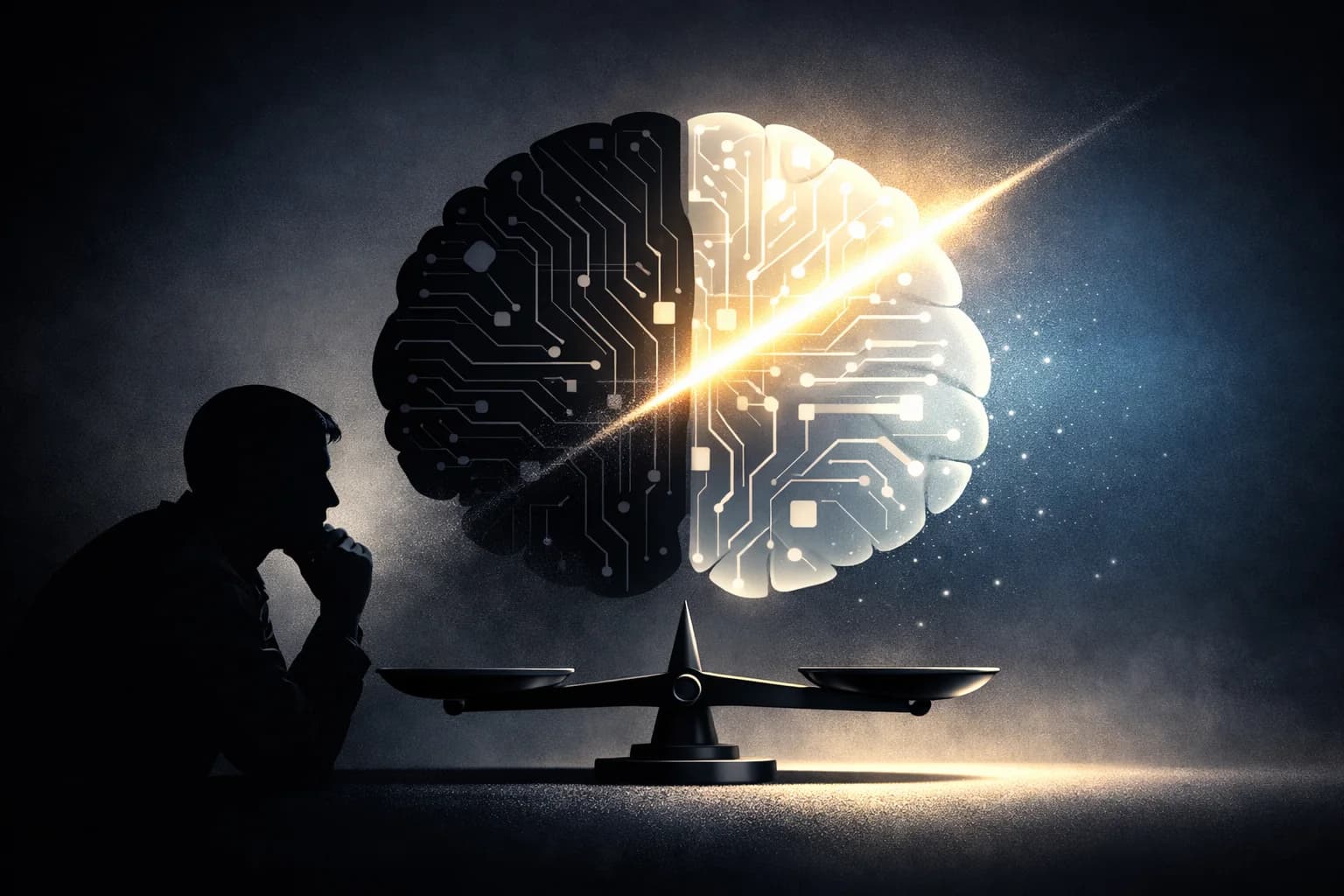
The culture of doubt is an approach to life that encourages critical reflection and constructive discussion on complex issues.
By promoting the questioning of certainties and the continuous search for more accurate answers, it proves to be a powerful ally for those seeking in-depth knowledge and specialization.
In the culture of doubt, perplexity is not seen as a sign of weakness, but as an essential tool for improving the quality of decisions.
In a context where Artificial Intelligence is evolving at a frightening speed, claiming ever more space, this approach is highly desirable to avoid erroneous assumptions and systemic errors.
Through the culture of doubt, it becomes possible to identify flaws in automated systems before they turn into concrete and serialized problems. In particular, by significantly reducing what we might call the AI "hype" effect, we can maintain a healthy balance between enthusiasm for innovation and awareness of the real risks that such a revolution entails.
Therefore, we must strive to be cooler than machines, maintaining a critical view of everything they generate.
Promoting the culture of doubt and encouraging constructive dissent involves valuing new “devil's advocates” who constantly question artificial decisions, highlighting their weaknesses.
It is not an easily standardized process but one that can go through three key phases. Let's look at them in detail:
Phase 1 Evaluate exclusions
It is absolutely important to focus on a question-based rather than answer-based mindset. A critical approach that leads to shaping AI activity by immediately isolating potential negative impacts of its operation. An action to be conducted by focusing on exclusion criteria rather than admission criteria.
Phase 2 Organize periodic reviews and independent audits
Once the process is implemented, it is vital to schedule regular checks of AI systems to identify anomalies, bias, or side effects. This step cannot disregard the use of external experts who can ensure objective evaluations not influenced by internal interests.
Phase 3 Diversify perspectives
In this phase, it becomes fundamental to involve individuals with diverse backgrounds (technological, legal, ethical, social) in decision-making processes to obtain a more complete view of AI's work.
If decisions on how to develop and use it are made only by a restricted group of experts, there is a risk of overlooking all the legal, ethical, and social implications involved. Algorithms, in fact, can reproduce existing biases and even ignore potential legal implications.
The adoption of the culture of doubt is a point of extreme importance in AI development. All major players in the movement employ specific dedicated resources for this purpose. Google DeepMind has established an “Ethics & Society Board” to examine the social implications of their projects, OpenAI regularly publishes reports on the limitations and risks of its models, while Microsoft has implemented an “AI Ethics Review” to evaluate the impact of each new technology before public release.
Embracing the culture of doubt does not mean hindering innovation. Rather, it means ensuring its responsible, ethical, and sustainable development.
Constantly questioning the infallibility of artificial intelligence is the first step towards wiser and more far-sighted decisions. After all, when asked “do you consider yourself infallible?” ChatGPT's AI itself responds as follows:
“No, I am not infallible. I can make mistakes, especially on complex topics, recent information, or contexts that require nuanced interpretations.”
Once again, it hit the mark.